Choosing the right ballast is not only about scale. It is also about the scene you are building.
A clean main line, an older yard, a branch line, an industrial siding, and a desert scene may all use different colors, textures, and materials. Real railroads are not all one perfect color, and model railroads usually look better when the ballast and scenery match the area around the track.
Use this guide to help choose the right look for your layout.
Main Line Track
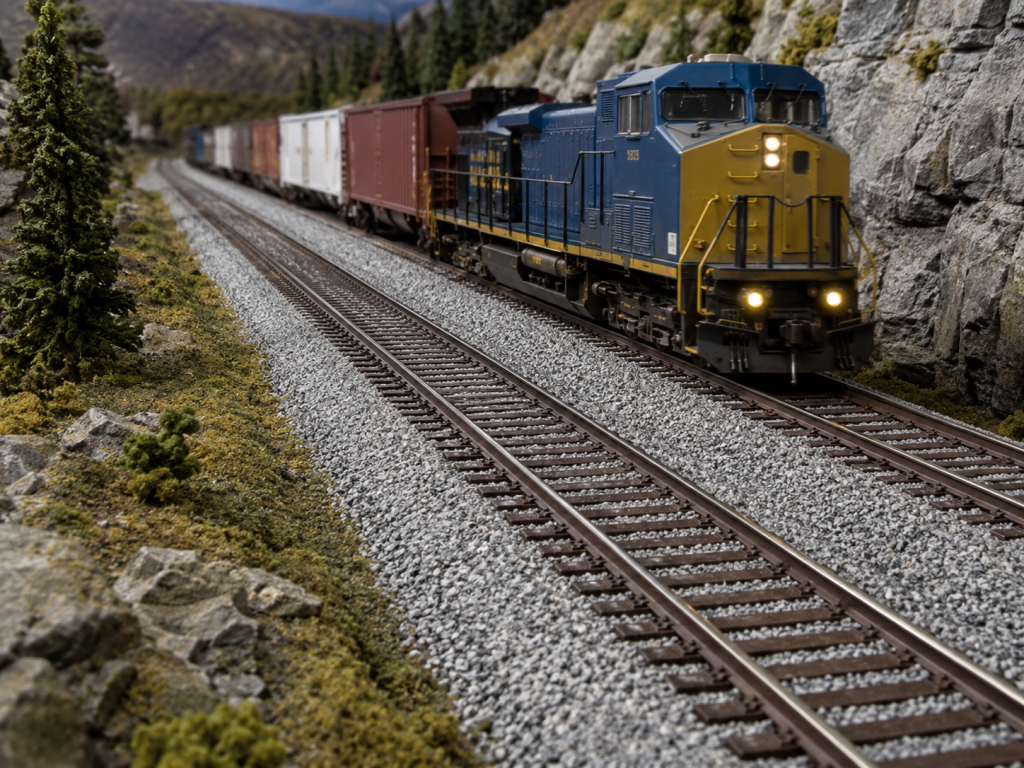
Main lines usually look cleaner and more maintained than older sidings or industrial areas. The ballast is often more even, better shaped, and more consistent in color. For a main line, choose a ballast color that fits the railroad, region, or look you are modeling. Gray, granite, limestone, and lighter rock colors are common choices for main line track.
Main line scenes work well for:
HO scale layouts
N scale layouts
Modern railroads
Passenger lines
Freight main lines
Cleaner track areas
Finished display sections
If you want the track to look newer or well-maintained, start with a clean ballast color and keep dirt or cinders lighter.
Yard Tracks
Yards usually look different from main lines. They often have older ballast, mixed rock, dirt, cinders, spilled material, weeds, and darker areas between the tracks. A yard does not need to look perfect. In fact, it often looks more realistic when the color is slightly mixed and uneven.
For yard scenes, consider using:
Ballast
Cinders
Dirt
Fine rock
Mixed colors
Weathering material
Yards are a good place to blend materials together. You can use a main ballast color, then add darker cinders, dirt, or powder in spots to make the track look used.
Industrial Areas
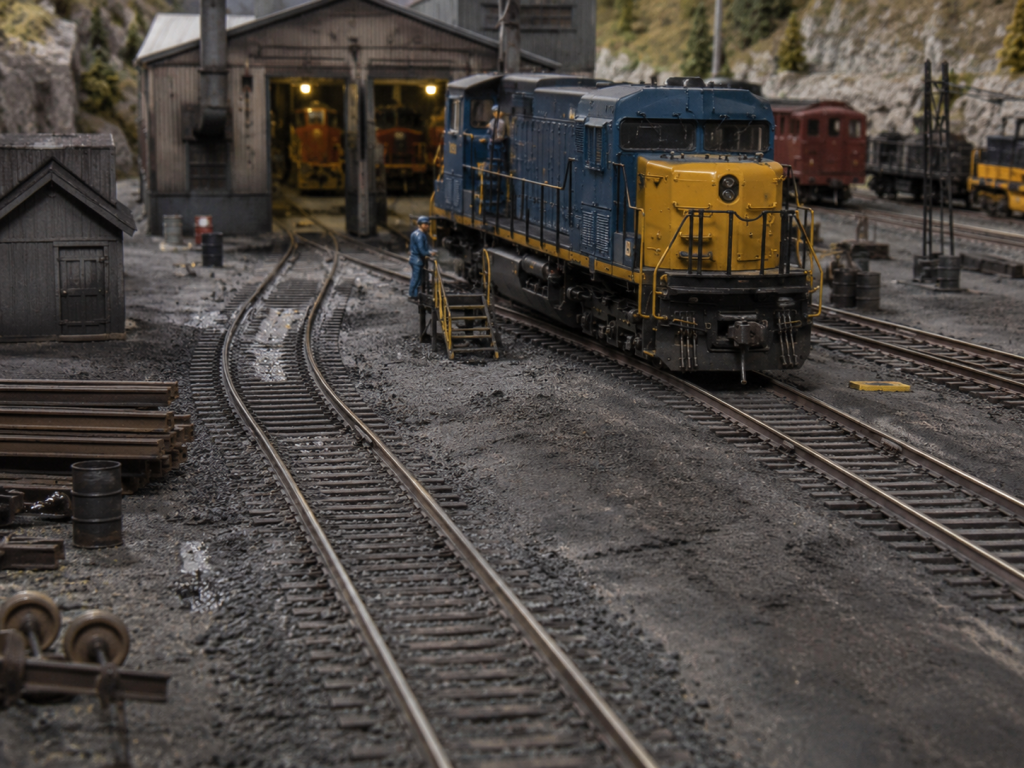
Industrial track often has the most character. These areas may include old ballast, dirt, oil stains, spilled loads, gravel, cinders, and worn track. Industrial scenes are a good place to use darker material and more texture. The ballast may be thin, dirty, or partly covered by dirt and gravel.
Industrial scenes work well for:
Factories
Warehouses
Team tracks
Engine shops
Freight houses
Loading tracks
Mills
Mines
Scrap yards
For this type of scene, do not make everything too clean. A little dirt, cinder, and mixed rock can make the area look more realistic.
Sidings and Branch Lines
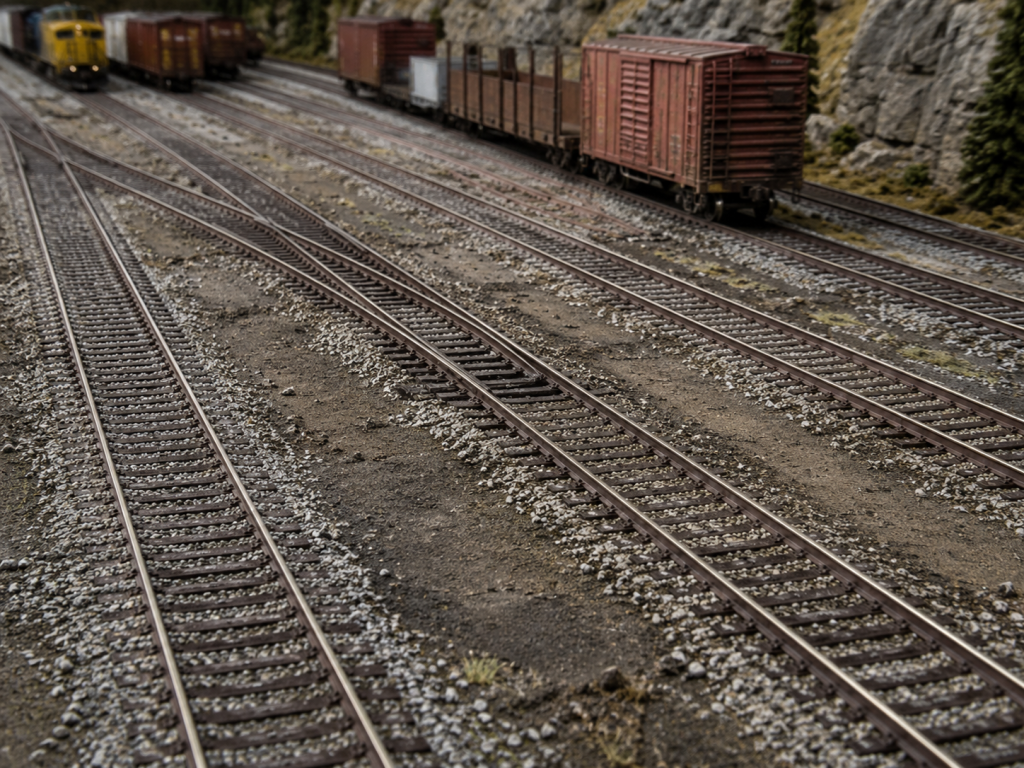
Sidings and branch lines are often less maintained than main lines. The ballast may be older, lower, darker, or mixed with dirt and weeds. These areas are good for a softer, more worn look. You can use ballast as the base, then blend in dirt or fine scenery material along the edges.
Good choices for sidings and branch lines include:
Older-looking ballast
Dirt-colored material
Cinders
Fine gravel
Mixed scenery rock
This is a good option if you want your layout to look like a small-town railroad, rural branch line, older freight route, or lightly used track.
Desert Scenes
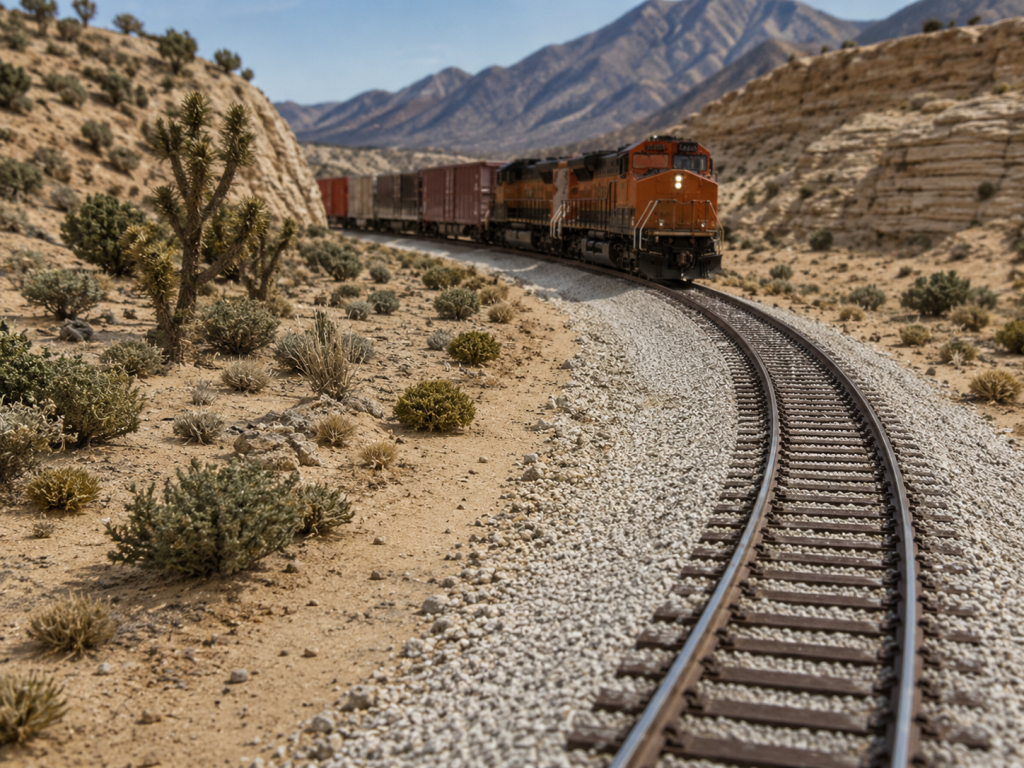
Desert scenes often look better with lighter earth tones, tan material, sand, gravel, and natural rock colors. Instead of using only clean gray ballast, desert track can be blended with sand, dirt, and scenery rock to match the surrounding ground.
Desert scenes work well for:
Arizona layouts
Southwest railroads
Dry washes
Branch lines
Industrial spurs
Mining scenes
Open country scenes
For desert scenes, the area around the track is just as important as the track itself. Use the ballast color as the track base, then blend the shoulders into sand, dirt, and natural ground cover.
Mountain Scenes
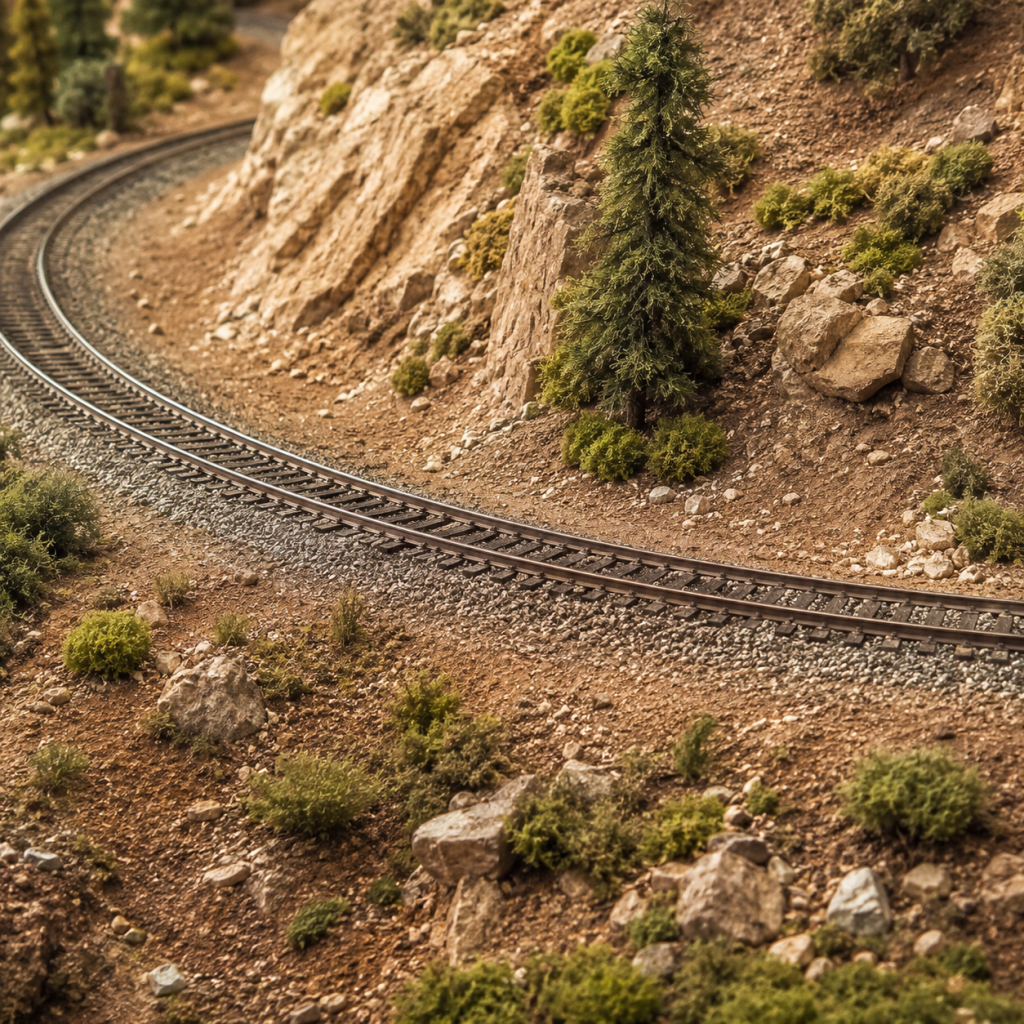
Mountain scenes can use darker rock, gray ballast, granite colors, crushed stone, and larger scenery rock around the track. For mountain railroads, the ballast should look like it belongs with the surrounding cuts, slopes, fills, and rock faces.
Mountain scenes work well for:
Rock cuts
Tunnels
Bridges
Mountain main lines
Logging railroads
Mining railroads
Heavy freight lines
You can make the track look more realistic by matching the ballast with nearby rock, talus, and scenery stone.
Engine Service Areas
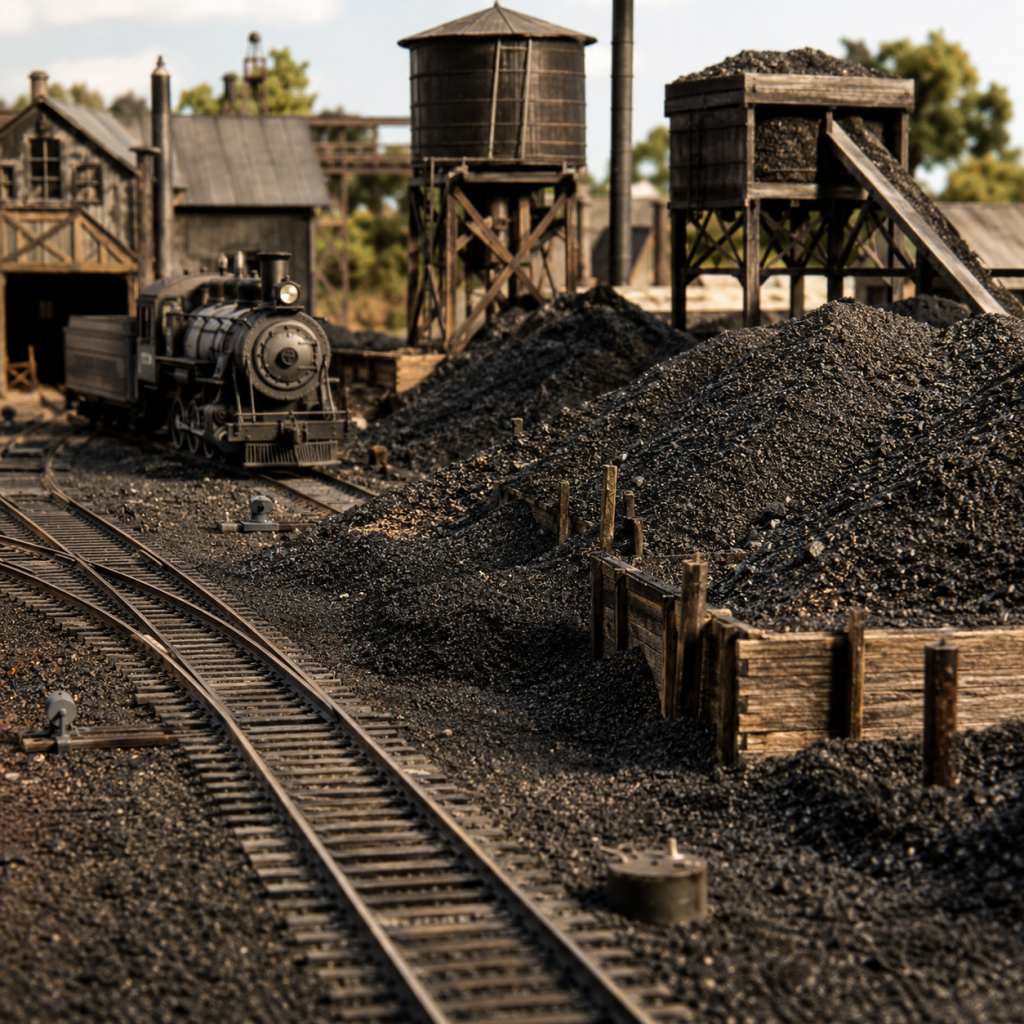
Engine terminals and service tracks are usually darker and dirtier than regular track. These areas can include coal dust, cinders, oil stains, ash, dirt, and dark ballast. This is a good place to use black, gray, brown, and mixed materials.
Engine service scenes work well for:
Steam facilities
Diesel shops
Roundhouses
Turntables
Fuel tracks
Coal towers
Ash pits
These scenes should not look too clean. A darker, more used look usually works better.
Dirt Roads and Grade Crossings
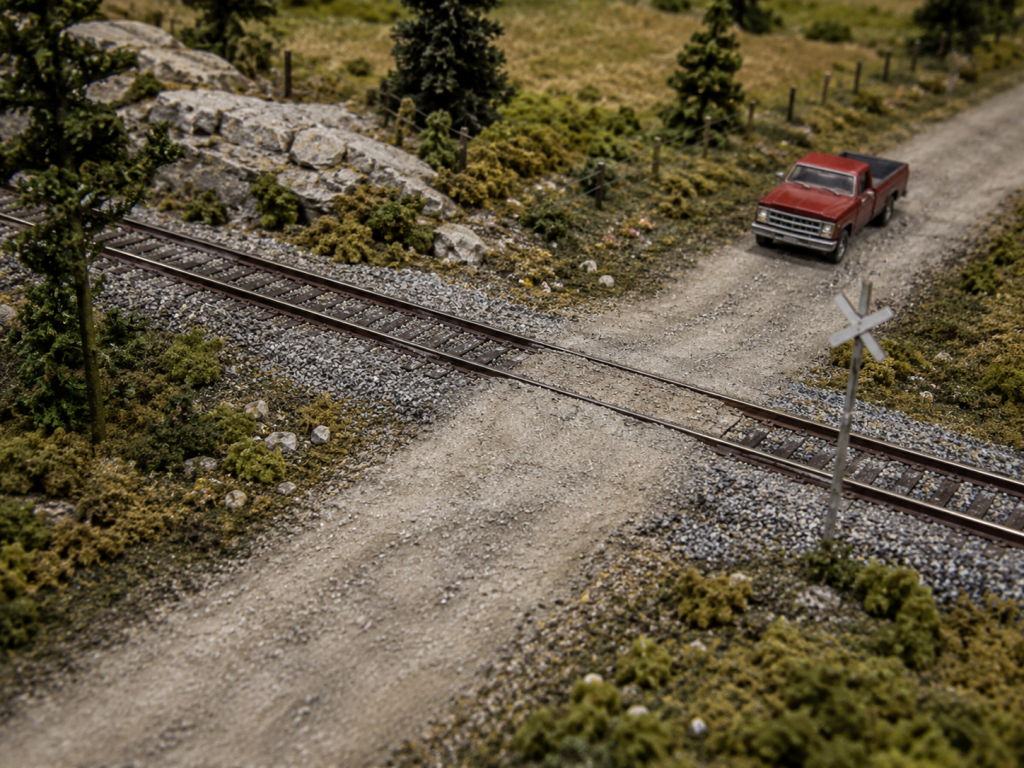
Ballast is not the only material that matters. Many layouts also need dirt roads, gravel roads, parking lots, paths, and grade crossings. For these areas, use dirt, sand, gravel, or fine scenery material that matches the scene around the track.
Good uses include:
Dirt roads
Farm roads
Industrial roads
Yard access roads
Parking areas
Driveways
Grade crossings
Loading areas
Blending the road material into the ballast can help the whole scene look connected.
Do Not Be Afraid to Mix Materials
Real railroad track is rarely one perfect color. Over time, ballast gets dirty, stained, patched, replaced, and mixed with other material.
For a more realistic layout, try using one ballast as the main color, then add small amounts of dirt, cinders, sand, gravel, or powder.
This works especially well in:
Yards
Sidings
Industrial areas
Engine terminals
Older track
Abandoned track
Branch lines
Start light. You can always add more material, but it is harder to remove too much.
Simple Scene Guide
For clean main line track, start with a clean ballast color.
For yards, add dirt, cinders, or mixed ballast.
For industrial areas, use darker and dirtier material.
For branch lines, use older-looking ballast with dirt along the edges.
For desert scenes, blend ballast with sand, dirt, and natural earth tones.
For mountain scenes, match the ballast with nearby rock and scenery stone.
For engine service areas, use darker material, cinders, coal dust, or ash colors.
Need Help Choosing?
If you are not sure what scene you are building, start with the area around the track.
Ask yourself:
Is this track new or old?
Is it a main line or a siding?
Is the railroad clean or heavily used?
Is the scene desert, mountain, rural, or industrial?
Do I want the ballast to stand out or blend into the scenery?
Once you know the scene, choosing the right ballast becomes much easier.
If you still need help, visit our Need Help Choosing page and we can help point you in the right direction.
Continue the Guide
Choose Your Scale
How Much Ballast Do You Need?
Bag vs LBS
Club / Wholesale Orders
You must be logged in to post a comment.