

Description
Roofing Sand gives your layout buildings the fine, gritty surface real rooftops have.
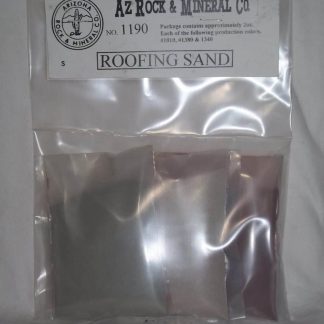
The 1190 Bag contains three natural rock powders in red, gray, and green blends. These colors mimic mineral roofing granules used on tar-and-gravel or composite shingle roofs across North America. Each powder is finely ground and packaged in a divided bag, providing multiple color options in one product.
These sands are ideal for HO and N scale rooftops. They replicate commercial and industrial roofing surfaces with believable texture and tone. You can apply them directly over flat styrene, cardboard, or kit roofing with adhesive or matte medium. Once dry, they stay in place and reflect light like real rooftop grit.
No paint required—just glue, sprinkle, and seal.
Where This Type of Roofing Is Seen
This sand replicates rooftop textures seen on thousands of buildings across the U.S.
Older city buildings, warehouses, and garages often used mineral-surfaced roofing in similar tones. Red roofing sand appears on early 20th-century factories. Gray tones show up on mid-century flats, schools, and shops. Green granules became common on institutional or military buildings post-WWII.
You’ll find these roofs in nearly every railroad town, from Chicago to Albuquerque. Boxy buildings with flat roofs often used these materials. Some modelers even use this sand to weather parking lots or simulate faded asphalt patches.
Adding gritty rooftop texture makes any layout look more finished and realistic.
What the Material Is and Why It’s Effective
Our Roofing Sand is made from real crushed rock—not dyed foam or synthetic plastic.
Each color comes from a different stone source. The red is from iron-rich granite, the gray from volcanic fines, and the green from serpentine-based material. We crush and screen each one to powder form, then divide them into individual sections inside the bag. This gives you authentic colors and mineral shine—no paint, no fade, no flakes.
Because it’s stone, the product adheres well with glue and looks correct under close-up viewing or photography. It’s perfect for modern urban dioramas, rooftop detailing, or even architectural modeling.
How to Use Roofing Sand on Your Models
Start with a thin coat of white glue or matte medium brushed over the roof.
Sprinkle Roofing Sand onto the surface using a spoon, shaker, or your fingers. Tap or shake off the excess. Let it dry completely. Seal lightly with diluted matte medium if needed, especially for vertical surfaces. You can mix colors for faded effect or patch repairs. For tar lines, use thin black paint or ink before applying sand.
Use the red for factory or depot roofs, gray for downtown shops or school buildings, and green for military or 1950s-era commercial structures. You can even use it for roads, sidewalks, or rooftop gravel piles.
Why You Should Use Roofing Sand
It adds one of the most overlooked but important textures to model buildings—real rooftop grit.
Too often, modelers leave roofs flat or painted, which kills realism. Real buildings have texture, weathering, and surface buildup. Roofing Sand provides that without complicated techniques. It gives you three color options in one package, all made from real stone for realistic shine and scale texture.
No synthetic scenery product replicates mineral roofing as well as this.
Why You Need to Buy These
Roofing Sand completes your buildings with detail that makes a difference.
Whether you’re modeling city rooftops, desert garages, or industrial complexes, this product adds fine-scale realism to your structures. It’s easy to use, color-matched to prototype materials, and made entirely of real crushed rock. Use it once—and you’ll start using it on every layout.


Reviews
There are no reviews yet